If you are torn between Manotick and Greely, you are not alone. Both south Ottawa villages offer more space, a calmer pace, and a strong lifestyle appeal, but they serve very different day-to-day priorities. If you want to narrow the choice with confidence, this guide will help you compare character, housing, transit, amenities, and practical trade-offs so you can focus your search where it fits best. Let’s dive in.
Manotick vs. Greely at a Glance
At a high level, Manotick and Greely are both rural villages in Ottawa that the City sees as growth-focused communities. According to the City’s village planning framework, they are evolving in different ways, with Manotick centered around an established historic village core and Greely guided toward a more connected future village structure with a broader range of uses over time. You can see that distinction in the City’s planning documents for Ottawa’s growth-focused villages.
For most buyers, the choice comes down to this: Manotick offers more of a village-core lifestyle, while Greely offers more land and privacy. Neither is better in every case. The right fit depends on how you want your home and your daily routine to feel.
Manotick Lifestyle and Setting
Manotick is the more established of the two from a placemaking standpoint. The City’s secondary plan emphasizes a historic mixed-use core, pedestrian-friendly streets, protected Rideau River views, and public access to the water. Outside the core, the plan continues to support mostly single-family detached housing, which helps preserve the village’s spacious residential character.
That historic identity is a major part of Manotick’s appeal. The City identifies Watson’s Mill and Dickinson Square as being at the heart of the village, and the local business community promotes Manotick as a destination for shopping, dining, and heritage experiences. If you want a community with a defined center and a recognizable sense of place, Manotick stands out.
Greely Lifestyle and Setting
Greely offers a different kind of appeal. It is one of Ottawa’s largest rural villages, but the City says it does not yet have a traditional main street, a cohesive neighborhood pattern, or the same historical identity seen in villages like Manotick. Instead, the long-term vision is to guide Greely toward a more connected 15-minute village with a future core, sidewalks, trails, small-scale commercial uses, and a broader housing mix.
Today, Greely reads more clearly as a rural residential community shaped by larger lots and private servicing. The City’s Greely secondary plan reflects that reality while planning for future growth. If your top priority is space, separation from neighbors, and a quieter lot-focused setting, Greely may feel like the stronger fit.
Housing Patterns to Expect
Manotick homes
In Manotick, the planning framework keeps retail and mixed-use activity concentrated in the village core. Outside that area, single-family detached homes remain the dominant form. That pattern tends to support buyers who want a detached home in a community that still has a recognizable center for errands, dining, and local outings.
You may also find appeal in Manotick if you are drawn to lifestyle property categories such as waterfront or estate-style homes. The village includes low-density and estate areas that contribute to a more spacious feel, while still offering proximity to the core.
Greely homes
In Greely, detached homes are also the default residential form, but the lot pattern is a major differentiator. The City sets a minimum residential lot size of 0.4 hectares, or about 1 acre, in much of the village. That planning approach reinforces a lower-density, rural-residential environment where the home site itself is often a central part of the buying decision.
If you picture a property with more breathing room, more backyard flexibility, and a stronger sense of privacy, Greely is often the more natural match. Buyers who value the land as much as the house itself often start to lean Greely once they compare lot sizes.
Waterfront, Privacy, and Servicing
Why Manotick appeals to waterfront buyers
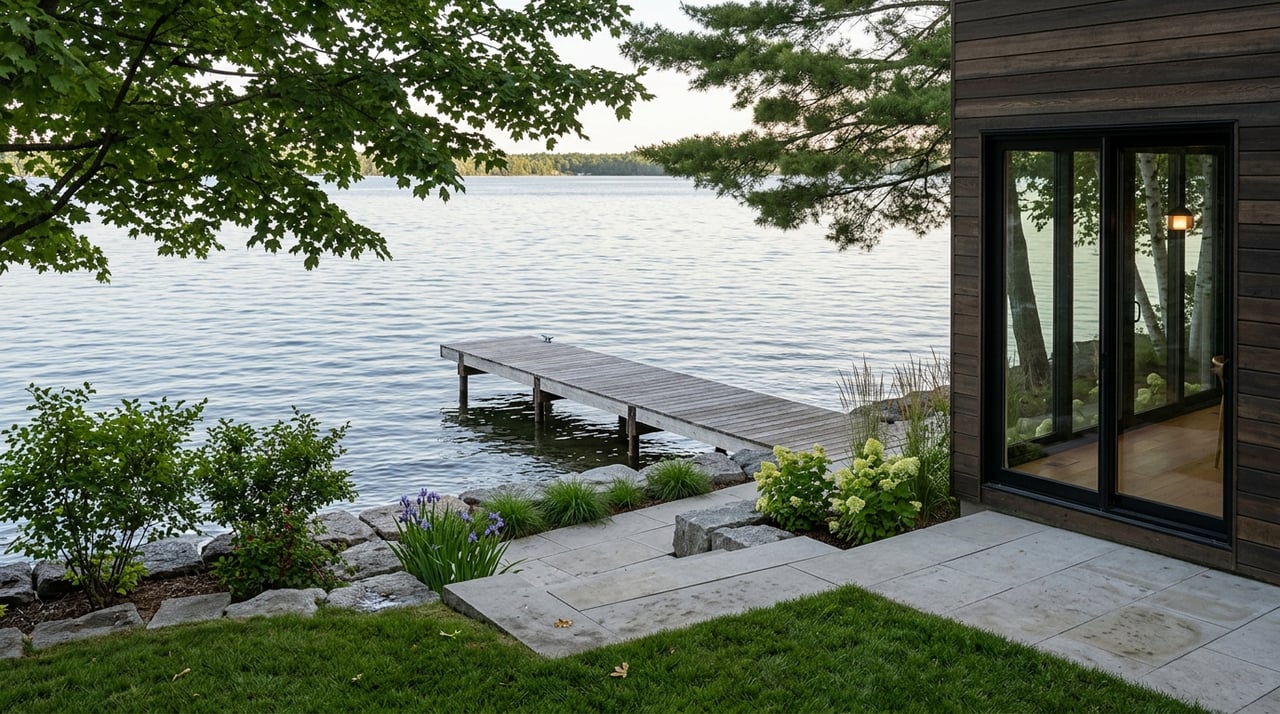
For buyers who care about river living or water access, Manotick has the clearer edge. The village plan specifically calls for conserving and enabling public access and views to the Rideau River, while also protecting the shoreline setting through design guidance. That creates a stronger connection between the village identity and the water.
From a servicing standpoint, new development in Manotick is generally on municipal water and wastewater services, although some older areas may still rely on private wells and septic systems. That means buyers should confirm servicing at the parcel level, especially when comparing older and newer homes.
Why Greely appeals to land buyers
Greely is less about waterfront living and more about lot size, privacy, and a rural feel. Its planning documents focus heavily on protecting groundwater, surface water, streams, and wetlands, while maintaining the village’s large-lot pattern. The community is still predominantly serviced by private wells and private septic systems, which is an important practical factor for buyers to verify during their search.
For some buyers, that private servicing setup is simply part of the rural lifestyle they want. For others, it is a trade-off to weigh carefully against convenience. Either way, it is one of the clearest functional differences between Greely and Manotick.
Commuting Differences Matter
If commuting is part of your weekly routine, Manotick has a clear advantage in transit access. OC Transpo’s rural Park & Ride information lists Manotick Park & Ride at the arena and community centre, and also notes service connections including routes 279, 299, and 305. Route 299 connects between Limebank Station and Manotick, which gives residents a more practical transit link than many rural villages have.
Greely is much more limited on this front. OC Transpo’s Shopper Route 304 serves Greely, Metcalfe, and Osgoode once a week on Thursdays, with service to South Keys and Billings Bridge. For many households, that means Greely is the more car-dependent choice for everyday commuting.
If you want a rural setting but still care about a stronger transit backup plan, Manotick will likely feel easier to live in. If you are comfortable driving for most daily needs, Greely may still be a strong option.
Everyday Amenities and Convenience
What daily life looks like in Manotick
Manotick already has a more established amenity base. The City lists the Manotick Community Centre and Mike O’Neil Arena in the village, and Watson’s Mill continues to anchor the area as an active heritage site on the Rideau River. The village core also benefits from local shopping and dining activity supported by the business improvement area.
The City’s 2025 decision to expand the local fire station also points to continued public investment as the community grows. For buyers who want errands, recreation, and village outings to feel more integrated into daily life, Manotick offers the stronger existing base.
What daily life looks like in Greely
Greely’s amenity profile is smaller today, but it is developing. The Greely Community Centre includes an adjacent park with play structures, and the City is planning Green Jacket Park in the village. Greely’s planning framework also envisions future parks, recreation facilities, and small-scale commercial uses as the village evolves.
That means Greely may suit buyers who are comfortable trading some immediate convenience for space and a more rural residential feel. If you do not need a defined village core to enjoy where you live, the current amenity gap may feel manageable.
Which Village Fits Your Priorities?
A simple way to compare the two is to think about what matters most after move-in. Do you want your day-to-day lifestyle to feel more connected to a village center, or do you want your property itself to do most of the work for your lifestyle?
Here is a quick breakdown:
Choose Manotick if you want:
- A historic riverside setting
- A defined village core
- Stronger shopping and dining presence
- Better transit connections
- More appeal for waterfront-oriented buyers
Choose Greely if you want:
- Larger lots
- More privacy between homes
- A stronger rural residential feel
- Space for outdoor use and flexibility
- A home search centered on land first
According to the City’s planning direction, that is the practical split between these communities. Manotick is often the better match when village character and convenience lead the decision. Greely is often the better match when lot size and privacy matter more than walkability.
Smart Questions to Ask Before You Decide
No matter which village interests you most, it helps to verify a few details early in your home search. Because both communities are growing, the right decision often comes down to property-specific factors rather than just postal code or reputation.
Focus on these questions:
- Is the home on municipal services or private well and septic?
- How large is the lot, and how usable is it?
- What commute will you actually use during a normal week?
- How important is proximity to shops, dining, and community facilities?
- Do you want a waterfront or river-adjacent setting, or simply more land?
These answers can quickly clarify whether Manotick or Greely is the better long-term fit for your household.
If you are comparing lifestyle properties, rural acreage, or village homes in south Ottawa, working with an advisor who understands the differences at a local level can save you time and help you avoid buying into the wrong lifestyle. The The Zak Green Team takes a strategic, data-informed approach to matching buyers with the right community and property type across Ottawa and the surrounding region.
FAQs
Which village is better for a buyer who wants a walkable village feel?
- Manotick is generally the better fit because it already has a defined historic core, shopping and dining activity, and a more pedestrian-oriented planning framework.
Which village is better for a buyer who wants a larger lot?
- Greely is often the stronger option because its plan reinforces large-lot residential living, including a minimum lot size of about 0.4 hectares in many areas.
Which village has better transit for commuters?
- Manotick has better transit access because it has a rural Park & Ride and route connections listed by OC Transpo, while Greely’s public transit service is much more limited.
Which village is better for waterfront-oriented homebuyers?
- Manotick is the clearer choice for waterfront-oriented buyers because its village identity and planning framework are closely tied to the Rideau River, public access, and protected views.
Which village is more dependent on private wells and septic systems?
- Greely is more predominantly serviced by private wells and private septic systems, while new development in Manotick is generally on municipal water and wastewater services.