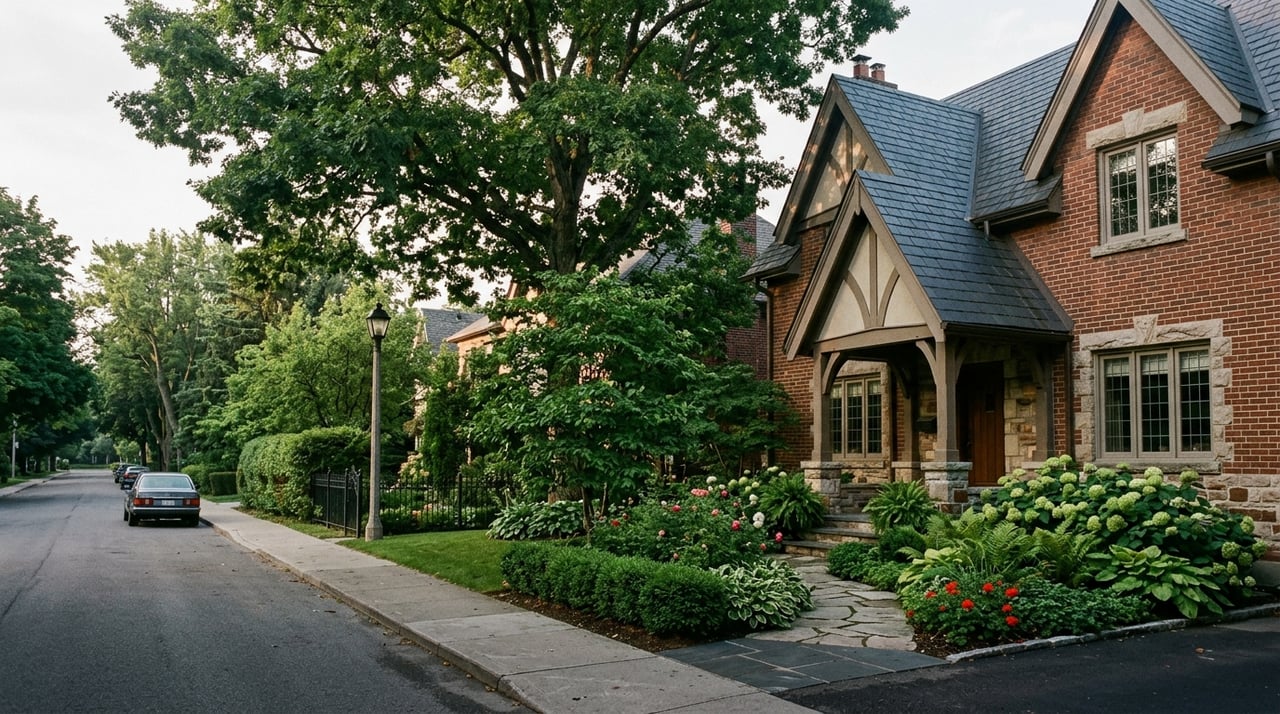
What if the best part of city living is not speed, but rhythm? In Old Ottawa South and Old Ottawa East, daily life tends to feel grounded in familiar routes, nearby essentials, and outdoor spaces that are easy to work into your routine. If you are looking for a neighborhood where coffee, pathways, parks, and community life are part of the day-to-day, this guide will help you understand the appeal. Let’s dive in.
What slow-lane living means here
In Old Ottawa South and Old Ottawa East, “slow-lane living” does not mean giving up convenience. It means your days can feel more local, more walkable, and more connected to the places you actually use. The overall pattern is less about rushing across the city and more about settling into a steady neighborhood rhythm.
Old Ottawa South is bounded by Bronson Avenue, the Rideau Canal, Avenue Road, and the Rideau River. Old Ottawa East sits between the canal and the river, extending north to Nicholas Street and Highway 417 and south to Avenue Road. The City of Ottawa describes Old Ottawa East as a predominantly residential community, with a greater range of uses around Lees Station and the Main Street corridor.
Taken together, these areas offer an inner-city setting with a strong residential feel. You are close to major city connections, but the visible daily experience is shaped by local streets, community spaces, and nearby amenities.
Old Ottawa South and East at a glance
Both neighborhoods are closely tied to community life. Their local associations emphasize resident participation, amenities, and quality of life, which helps explain why these areas often feel established and engaged.
That matters when you are choosing where to live. A neighborhood is not just its housing stock or commute options. It is also the pattern of everyday life, including where you get coffee, where you walk, and where you see familiar faces.
Daily routines feel easy here
One of the clearest strengths of these neighborhoods is how easily local stops fit into your day. You do not need to plan a full outing to enjoy them. Many of the amenities support short, repeatable routines.
In Old Ottawa South, Oat Couture at Bank Street and Glen Avenue is open daily from 7:00 a.m. to 5:00 p.m. That makes it a simple option for breakfast, a casual meeting, or a mid-morning reset.
Also on Bank Street, Sofia Vintage Motor Café at 1158 Bank Street describes itself as a social space with a private car collection and automotive books. Its hours run Tuesday through Saturday from 8:00 a.m. to 7:00 p.m. and Sunday and Monday from 8:00 a.m. to 4:00 p.m., giving you another neighborhood spot that works for both daytime and early evening routines.
In Old Ottawa East, Happy Goat’s Main Café at 145 Main Street is open daily from 8:00 a.m. to 7:00 p.m. For residents near Main Street, that creates a reliable anchor for a quick coffee, a work break, or a casual catch-up.
Evenings stay local and low-key
Slow-lane living is also about what your evenings feel like. In these neighborhoods, entertainment can be simple and close to home rather than built around a major destination.
The Mayfair Theatre at 1074 Bank Street is one of Ottawa’s last two neighborhood cinemas and one of its oldest surviving independent movie houses. Because its film programming changes week to week, it fits naturally into an easy evening-out routine.
That kind of amenity changes the tone of a neighborhood. Instead of needing to organize a big night downtown, you can keep things close, comfortable, and familiar.
Community spaces add everyday value
Beyond cafés and entertainment, both neighborhoods have established community touchpoints. These places support civic life, local programming, and regular resident involvement.
Old Ottawa South’s community association runs social events, programming, and advocacy from the Ottawa South Community Centre at 260 Sunnyside Avenue. In Old Ottawa East, the community association represents residents and businesses, holds meetings at Old Town Hall at 61 Main Street, and helps publish The Mainstreeter six times a year.
For buyers, this kind of structure can be meaningful. It suggests a neighborhood where local information, events, and participation remain visible parts of everyday life.
Canal and river access shape the lifestyle
Water is a major part of the identity here. The Rideau Canal is not just a scenic backdrop. The National Capital Commission describes it as a UNESCO World Heritage Site, a national historic site of Canada, and a Canadian heritage river.
That may sound like a tourism detail, but for residents it translates into something practical. The canal edge functions as a daily-use corridor for walking, cycling, and connecting to other parts of the city.
The NCC’s Capital Pathway network covers more than 200 kilometres of off-road multi-use pathways. It connects parks, gardens, museums, and attractions across the region, which gives you access to a broader active transportation and recreation network right from these central neighborhoods.
Parks support a four-season routine
The outdoor appeal here is not limited to one season. The parks and waterfront access points make it easier to build outdoor time into your week year-round.
Springhurst Park has a canoe launch, and the city has proposed dock additions there for canoe, kayak, and stand-up paddleboard access. Brantwood Park is also listed by the city as a dock location, reinforcing how closely these neighborhoods connect to the water.
In warmer months, that means the river and canal edges can become part of your normal after-work or weekend routine. In winter, the pattern shifts rather than stops.
The Rideau Canal Skateway runs from downtown Ottawa to the Hartwells Locks, and the NCC lists access points near transit. The NCC also includes the Rideau Canal Eastern Pathway along Colonel By Drive on its cleared-pathway list, from Laurier Bridge to Hog’s Back, which helps keep the canal edge useful for winter walking, commuting connections, and recreation.
Getting around without rushing
These neighborhoods offer a car-light feel while staying well connected. That balance is part of what makes the pace feel gentler.
OC Transpo labels routes 6, 7, and 10 as Frequent, all-day service. Route 10 serves Main, Lees, Saint-Paul, Carleton, and Hurdman. Route 6 serves Bank, Sunnyside, Gladstone, and Lansdowne, while Route 7 serves Bank, Sunnyside, Lansdowne, and Carleton.
According to OC Transpo, frequent routes generally run every 15 minutes or less on their busiest weekday sections and operate seven days a week along main roads. For you, that can mean more flexibility in how you move through the city, whether you are commuting, meeting friends, or running errands.
Why buyers are drawn to this pace
If you are comparing central Ottawa neighborhoods, Old Ottawa South and Old Ottawa East stand out for their repeatable lifestyle. The strongest pattern here is not a single landmark or headline attraction. It is the way local amenities, community spaces, and outdoor routes support an easy daily rhythm.
You can picture the routine clearly: grab a coffee on Bank or Main, walk or bike along the canal or river, stop at a park, catch a movie, attend a community event, and head home without crossing half the city. That kind of predictability is part of the appeal.
For many buyers, especially those looking for a long-term fit, that consistency matters as much as square footage. You are not just buying a home. You are buying into the pace of life around it.
What this means for sellers
If you are selling in Old Ottawa South or Old Ottawa East, neighborhood lifestyle should be part of your marketing story. Buyers are often looking beyond finishes and floor plans. They also want to understand how a home connects to daily living.
In these communities, the story is strong when it is presented clearly. Proximity to the canal, pathways, parks, cafés, community hubs, and frequent transit can help buyers picture themselves living there, not just touring a property.
That is where a strategic, data-informed approach matters. When lifestyle value is real and specific, it should be framed with the same care as the home itself.
Slow-lane living, without feeling removed
A slower pace does not have to mean being far from everything. In Old Ottawa South and Old Ottawa East, the appeal comes from staying connected while keeping your day centered close to home.
That combination is not easy to find. These neighborhoods offer central Ottawa access, but their daily experience is shaped by local destinations, outdoor movement, and community participation rather than constant through-traffic and big-city urgency.
If that sounds like the kind of lifestyle you want to buy into, or the value you want your listing to communicate, working with a team that understands how to position neighborhood character can make a real difference. To talk through your next move in Ottawa, connect with The Zak Green Team.
FAQs
What is slow-lane living in Old Ottawa South and Old Ottawa East?
- It refers to a more routine-driven, local lifestyle where cafés, parks, pathways, community spaces, and daily errands are easy to fit into your day.
What are the boundaries of Old Ottawa South and Old Ottawa East?
- Old Ottawa South is bounded by Bronson Avenue, the Rideau Canal, Avenue Road, and the Rideau River, while Old Ottawa East sits between the canal and river and extends north to Nicholas Street and Highway 417 and south to Avenue Road.
What coffee shops are in Old Ottawa South and Old Ottawa East?
- Oat Couture on Bank Street in Old Ottawa South, Sofia Vintage Motor Café on Bank Street, and Happy Goat’s Main Café on Main Street in Old Ottawa East are all established neighborhood café options.
What outdoor features define life in Old Ottawa East and Old Ottawa South?
- The Rideau Canal, the Rideau River, nearby parks, canoe and dock access points, and connections to the NCC Capital Pathway network all help shape daily outdoor life.
What transit serves Old Ottawa South and Old Ottawa East?
- OC Transpo’s frequent routes 6, 7, and 10 serve key parts of Bank Street, Sunnyside, Main Street, Lees, Carleton, Lansdowne, and Hurdman.
Why do buyers consider Old Ottawa South and Old Ottawa East in Ottawa?
- Many buyers are drawn to the combination of central location, residential character, outdoor access, community amenities, and a day-to-day pace that feels more grounded and repeatable.